
Key takeaways:
- Massage parlors and entertainment venues in Thailand operate under the Entertainment Places Act B.E. 2509 (1966) — a law that’s been on the books for 60 years
- Licensed venues with proper permits operate legally as registered businesses with tax IDs and regulatory oversight
- The key legal distinction is between licensed and unlicensed operations, not between massage types
- This article explains the legal framework — it is not legal advice
This is the question everyone types into Google but few pages answer clearly: is soapy massage legal in Thailand? What about nuru? What about happy ending massage?
The answer is more nuanced than a simple yes or no, but it’s not complicated either. Thailand has a specific legal framework for entertainment venues that has been in place since 1966. Here’s what the law actually says.
Disclaimer: This article explains the Thai legal framework around massage and entertainment venues as a factual overview. It is not legal advice. For specific legal questions, consult a qualified Thai lawyer.
The Entertainment Places Act B.E. 2509 (1966)
Thailand regulates massage parlors, bath houses, and similar entertainment businesses under the Entertainment Places Act B.E. 2509, enacted in 1966. The Act has been amended multiple times since, most recently with proposed amendments in 2025 to strengthen oversight and penalties.
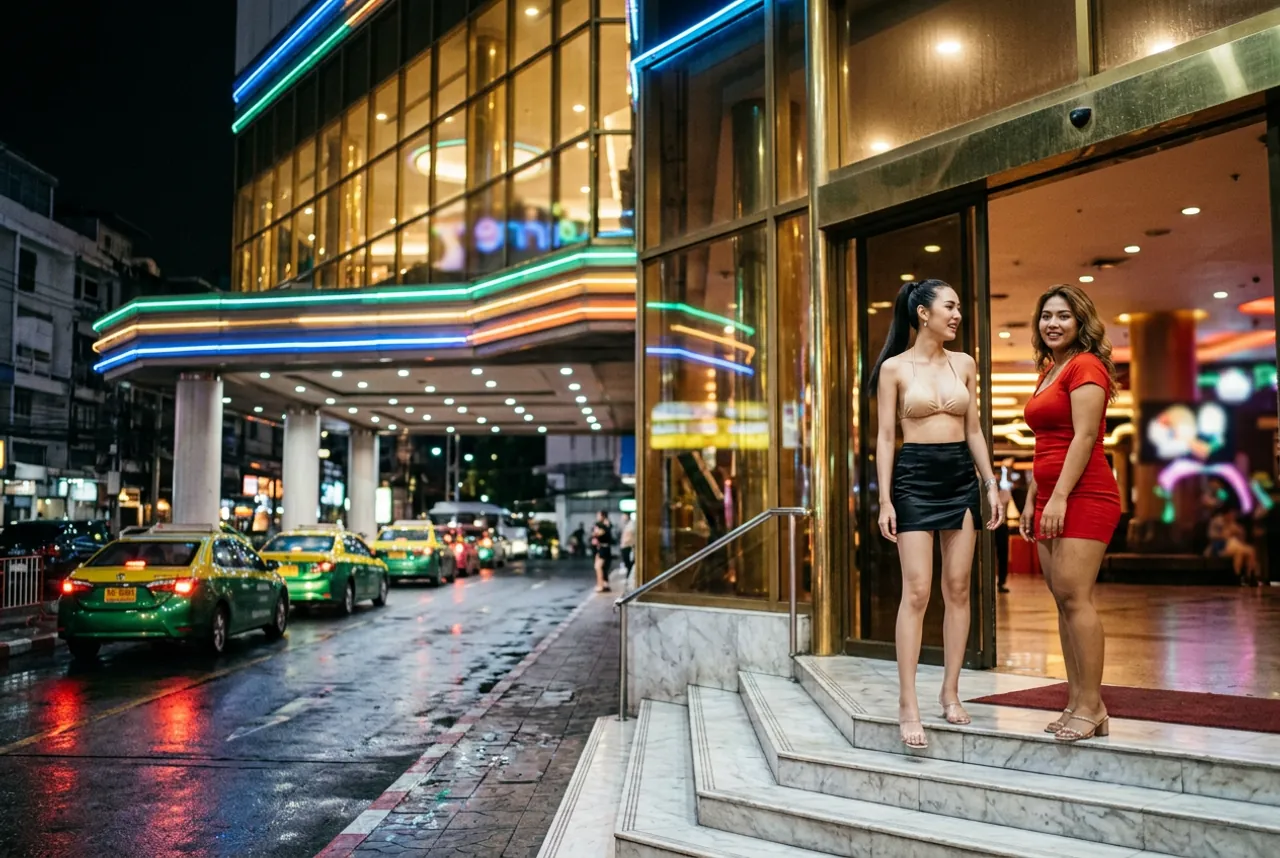
The Act defines “entertainment places” (สถานบริการ, sa-thaan bo-ri-gaan) across several categories, including:
- Dance halls and nightclubs
- Bars and pubs
- Massage parlors (ร้านนวด)
- Bath houses and bathing establishments (สถานอาบอบนวด — the Thai term for soapy massage venues)
- Karaoke venues
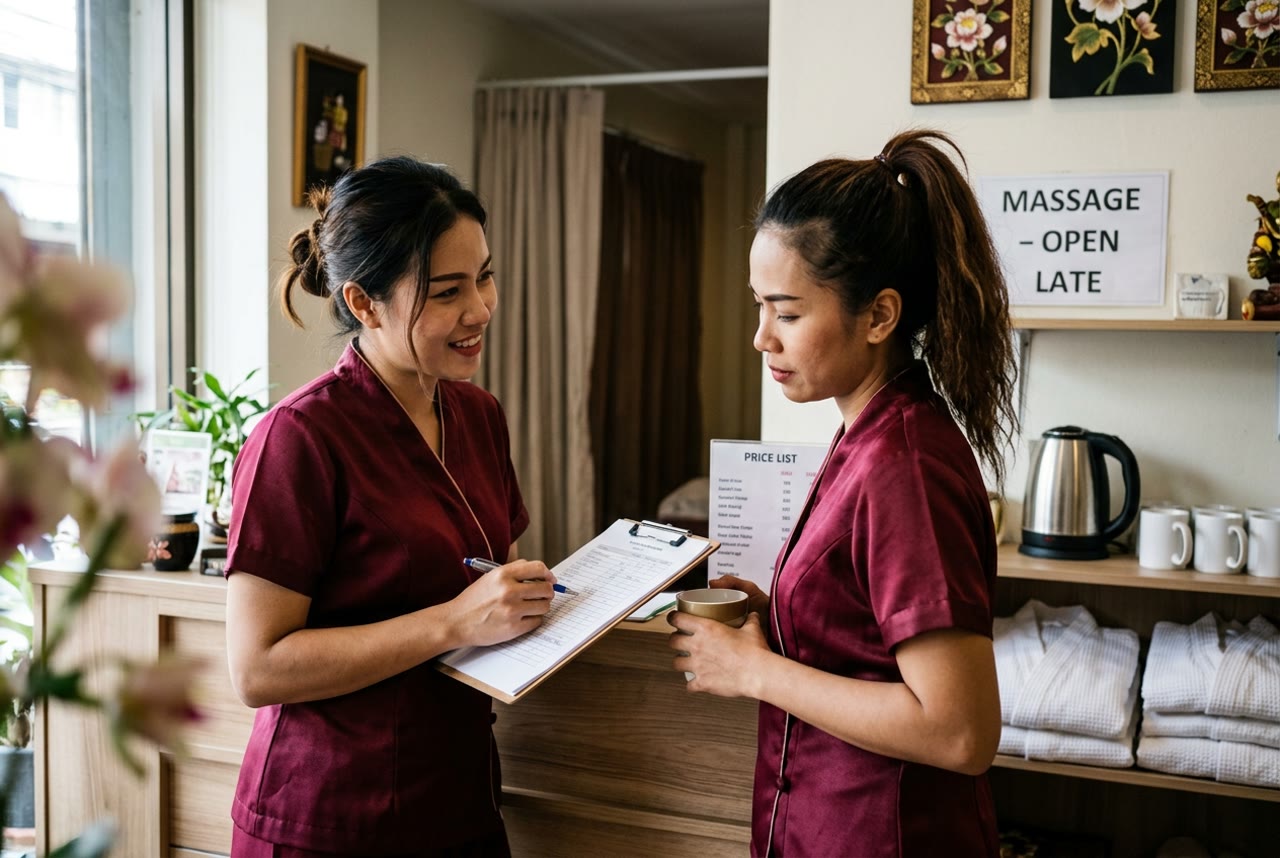
Under this law, any business operating as a massage parlor or entertainment venue must obtain the appropriate license from local authorities. The licensing process involves registration with the district office, compliance with building codes, health and safety standards, and periodic inspections.
What “licensed” means in practice
A licensed massage or entertainment venue in Thailand:
- Holds a valid operating permit issued by the district authority under the Entertainment Places Act
- Has a registered business address and tax identification number
- Pays taxes — entertainment tax, corporate income tax, and VAT where applicable
- Undergoes periodic inspections by local authorities
- Maintains employee records and complies with labor regulations
- Adheres to operating hour restrictions set by the permit (typically closing by 2:00 AM, though hours vary by area and license type)
In other words, licensed venues are legal businesses operating within a defined regulatory framework. The large soapy massage parlors you see on Ratchadaphisek Road — Colonze, Poseidon, Nancy — are licensed entertainment venues. They have been operating openly for years, in some cases decades, with government knowledge and regulatory oversight.
The same applies to nuru massage parlors on Sukhumvit. Venues like Daisy Dream and 102 Massage hold business registrations and operate as licensed establishments.
Licensed vs unlicensed: the real legal line
The critical legal distinction is not between types of massage (soapy vs nuru vs happy ending). It’s between licensed and unlicensed operations.
Licensed venues — those holding proper permits under the Entertainment Places Act — are legal businesses regardless of whether they offer soapy massage, nuru massage, or other services. They operate within the regulatory framework the government established for this industry.
Unlicensed operations — businesses offering similar services without proper licensing — are operating outside the legal framework. This includes shops that don’t hold entertainment venue permits but offer services that fall under the Act’s jurisdiction.
The practical implication for visitors: venues with a visible business presence — a proper shopfront, a Google Maps listing, a website, posted pricing, receipt capability — are overwhelmingly licensed operations. Establishments that operate from unmarked locations, shift addresses frequently, or can’t provide receipts are less likely to be licensed.
How the law applies to different massage types
Soapy massage (อาบอบนวด)
Soapy massage venues are explicitly covered by the Entertainment Places Act under the “bathing establishment” (สถานอาบอบนวด) category. This is the most clearly regulated category — the law was written with these venues in mind. Large soapy venues in Bangkok hold entertainment venue licenses and have done so for decades.
Nuru massage
Nuru massage is a newer category in Thailand (Bangkok’s first dedicated nuru parlor opened around 2019). Nuru venues typically register as massage parlors under the Act. The specific technique (gel vs soap) doesn’t change the licensing category — what matters is that the venue holds the appropriate permit.
Happy ending massage
This is the gray area. Happy ending shops are regular massage parlors — registered as standard massage businesses — where extras happen at the therapist level. The shop itself may hold a standard massage license (not an entertainment venue license). The legality of what happens inside depends on the specific services and the shop’s licensing.
Traditional Thai massage
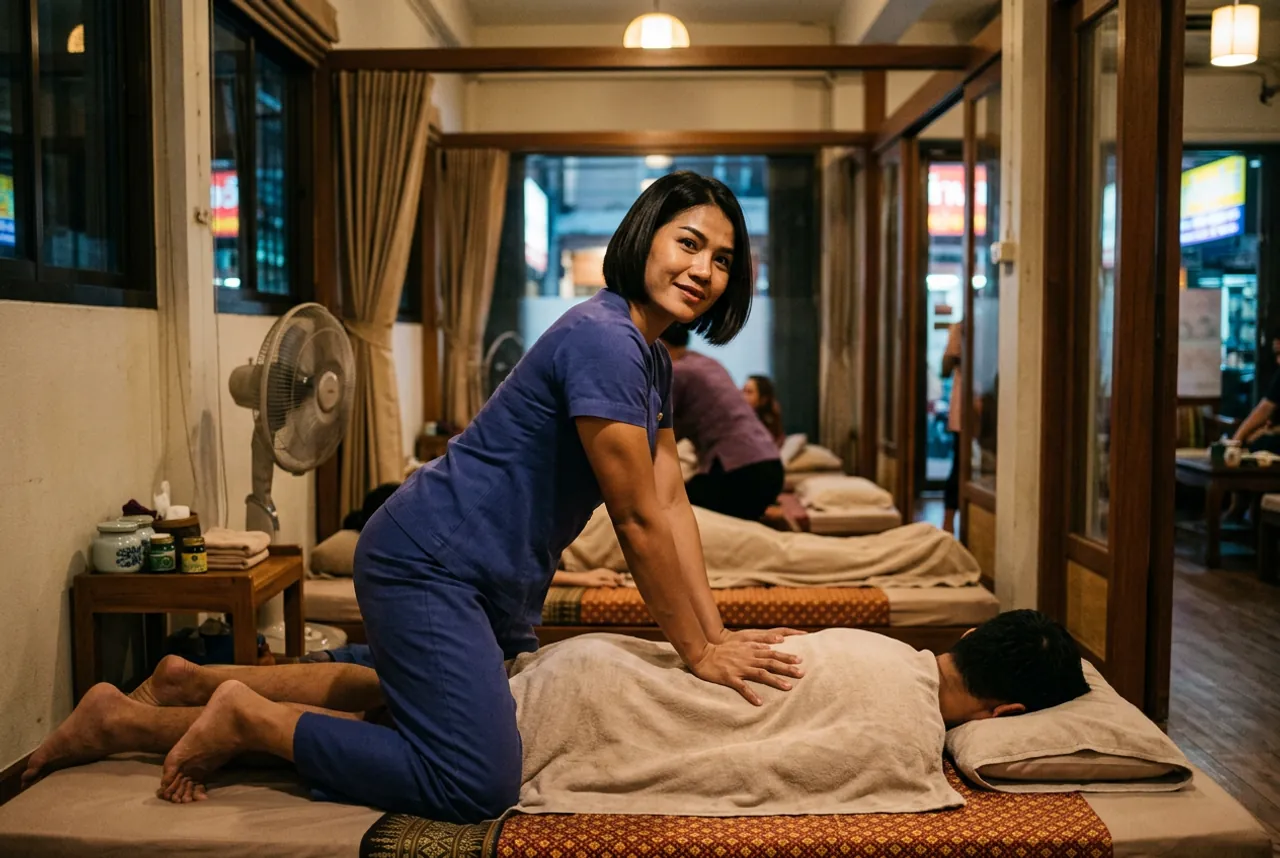
Traditional Thai massage (นวดแผนไทย) is separately regulated under the Thai Traditional Medicine Professions Act B.E. 2556 (2013). These establishments are explicitly excluded from the Entertainment Places Act. A legitimate Thai massage shop with “traditional medicine” registration is a different category entirely.
Common misconceptions
“Soapy massage is illegal.” Incorrect. Licensed soapy massage venues operate legally under the Entertainment Places Act. They are registered businesses with government permits.
“The government turns a blind eye.” This framing misunderstands the situation. The government doesn’t turn a blind eye — it actively regulates entertainment venues through a specific legal framework. Licensed venues comply with this framework. It’s not tolerance; it’s regulation.
“All massage parlors are the same legally.” No. Traditional Thai massage shops are regulated under different laws than entertainment venues. A spa registered for traditional medicine is legally distinct from a soapy massage parlor registered under the Entertainment Places Act.
“Foreigners face different legal rules.” The Entertainment Places Act applies to venues, not to their customers by nationality. A licensed venue serving a foreigner is operating under the same legal framework as when serving a Thai customer. However, tourists should note that general Thai laws apply to everyone within the country’s borders.
“The law hasn’t changed since 1966.” The Act has been amended multiple times. Proposed amendments in 2025 aimed to strengthen regulatory oversight, increase penalties for unlicensed operations, and update the framework for modern entertainment businesses.
How to identify a licensed venue
You’re not going to ask for a copy of their business license at the front desk. But you can look for practical indicators:
Visible business registration. Licensed venues typically display their business registration or tax ID somewhere in the lobby or near the reception counter.
Receipts. A venue that provides proper receipts (with tax ID, business name, and itemized charges) is operating as a registered business. If a venue can’t or won’t give you a receipt, question their legitimacy.
Fixed, posted pricing. Licensed venues have menu boards or price sheets. Prices don’t change based on who you are or what you look like. If pricing is vague or negotiable, the venue may not be operating within the standard framework.
Online presence. Established licensed venues have websites, Google Maps listings, and social media accounts. They don’t hide. Businesses that avoid any online footprint may have reasons for staying off the radar.
Operating hours. Licensed venues close by their permitted time (typically 2:00 AM or earlier). Venues operating at 4:00 AM may be pushing the boundaries of their license.
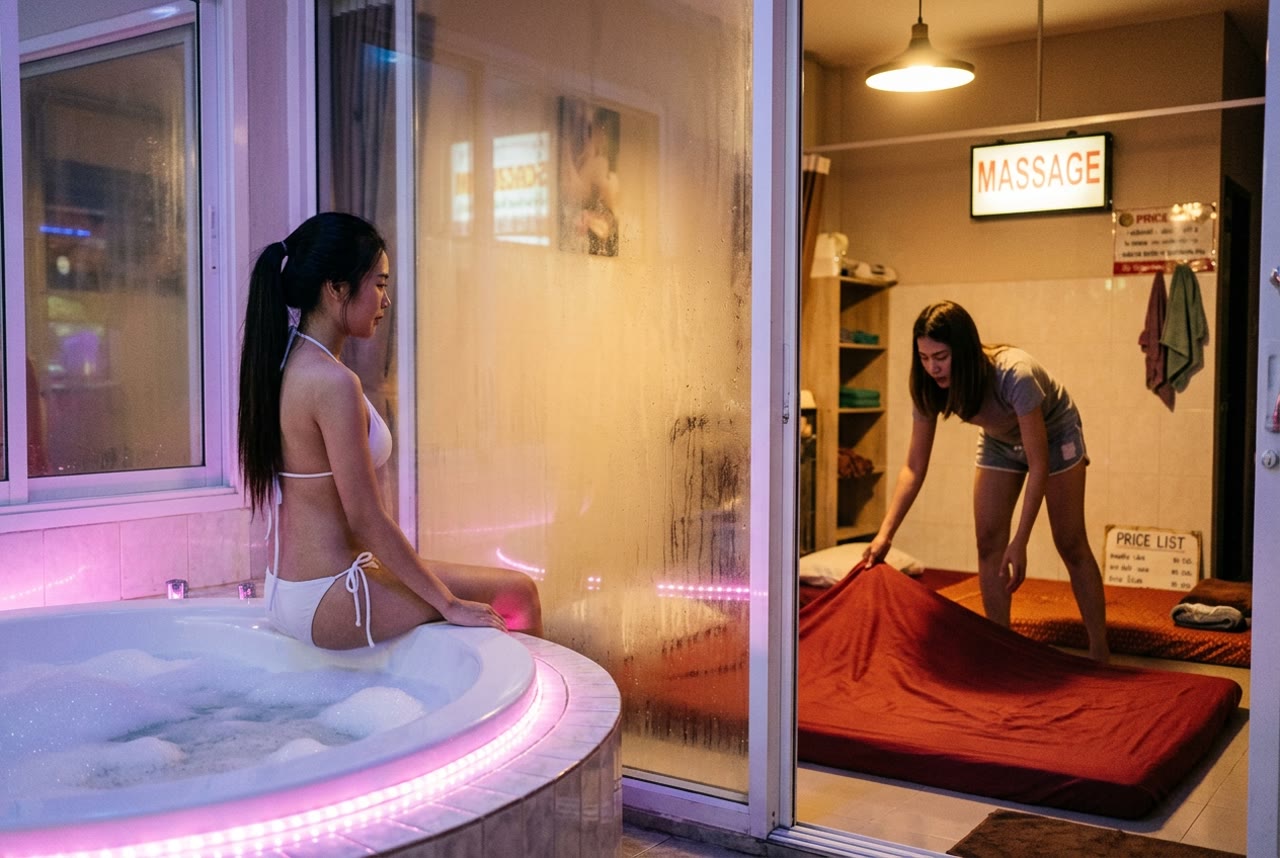
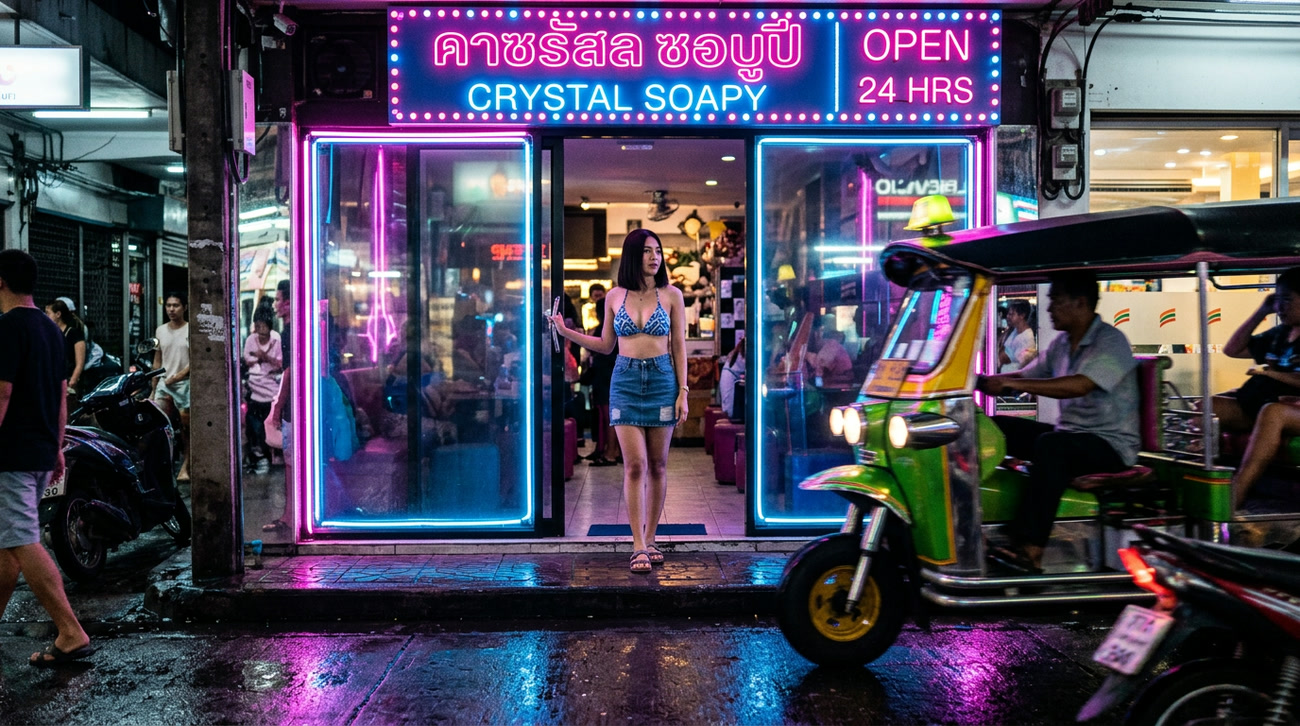
Physical premises. A proper shopfront with a real address versus an unmarked door down an alley. Licensed venues invest in their physical space because they’re long-term operations.
All venues in our soapy massage directory and nuru massage directory are established businesses with public-facing operations, posted prices, and verifiable addresses.
What the law means for visitors
If you’re visiting Thailand and considering a soapy or nuru massage, the practical advice is straightforward:
Go to established venues. Businesses with years of operation, online reviews, and visible premises are licensed operations working within the legal framework.
Keep receipts. Not because you’ll need them for legal reasons, but because a venue that provides receipts is a venue that operates as a registered business.
Don’t engage with street touts offering services from unmarked locations. Whatever their legal status, the quality and safety standards will be unpredictable.
Respect the rules of the venue. Licensed establishments have their own policies — no photography, no disruptive behavior, payment procedures. Follow them.
Recent regulatory developments
The Thai government has periodically reviewed and updated entertainment venue regulations:
-
2025 proposed amendments: Strengthened penalties for unlicensed entertainment operations and updated regulatory categories to account for newer business types. The amendments signaled continued government engagement with the entertainment venue sector rather than deregulation.
-
Periodic police actions target unlicensed operations, particularly during high-profile political moments. Licensed venues are generally unaffected by these actions because they already comply with the regulatory framework.
-
Zoning regulations determine where entertainment venues can operate. This is why soapy massage venues cluster in specific areas (Ratchada, Huai Khwang) rather than appearing in residential neighborhoods. The zoning is a feature of the licensing system, not a coincidence.
Frequently asked questions
Is soapy massage legal in Thailand?
Licensed soapy massage venues operate legally under the Entertainment Places Act B.E. 2509 (1966). Established venues like Colonze, Poseidon, and 102 Massage hold proper business registrations and entertainment venue licenses.
Is nuru massage legal in Thailand?
Licensed nuru massage parlors operate as registered massage businesses. The nuru technique itself isn’t specifically mentioned in the law — the regulation covers the type of venue and its licensing, not the specific massage method used.
What is the Entertainment Places Act?
Thailand’s primary law governing entertainment venues including massage parlors, bath houses, nightclubs, and karaoke venues. Enacted as B.E. 2509 (1966), it establishes the licensing framework, operating standards, and regulatory oversight for these businesses.
Can foreigners legally visit soapy or nuru massage venues?
Licensed entertainment venues serve customers regardless of nationality. There is no law prohibiting foreigners from entering licensed massage establishments. Some venues have their own foreigner policies, but these are business decisions, not legal requirements.
How can I tell if a venue is licensed?
Look for: business registration displayed in the lobby, proper receipts with tax ID, fixed posted pricing, a real business address, an online presence (website, Google Maps), and standard operating hours. Established venues listed in our directory are public-facing businesses with verifiable addresses.
Has the law changed recently?
The Entertainment Places Act has been amended multiple times since 1966. Proposed 2025 amendments aimed to strengthen penalties for unlicensed operations and update regulatory categories. The trend is toward tighter regulation of unlicensed businesses, not changes to the framework for already-licensed venues.
Your next step
Browse our directories for verified, established venues:
Want to understand how these services work? Read:
- What is Soapy Massage in Thailand?
- What is Nuru Massage? Complete Bangkok Guide
- How Soapy Massage Works: Step-by-Step
Last researched: April 2026. Legal information verified against the Entertainment Places Act B.E. 2509 and publicly available Thai legal sources. This article is a factual overview, not legal advice. Found something that needs updating? Let us know.