
Aromatherapy Massage in Thailand: What You Are Actually Buying
Aromatherapy massage — นวดอโรมา — sits at the top of most Thai spa menus and carries the highest price on the wellness side of the market. It is worth knowing exactly what the premium buys, because the answer is narrower than the menu implies and the treatment is genuinely pleasant regardless.
The short definition
Aromatherapy massage is an oil massage performed with essential oils blended into the carrier oil. The hands-on technique is the same — table, draping, long gliding strokes, kneading. What differs is the oil, the scent in the room, and usually the setting.
That is not a criticism. A treatment is the sum of its parts, and scent and setting are real parts. But a visitor should know that the premium over a plain oil massage is paid for the blend and the room, not for a different or more skilled technique.
The blends a Thai spa will offer
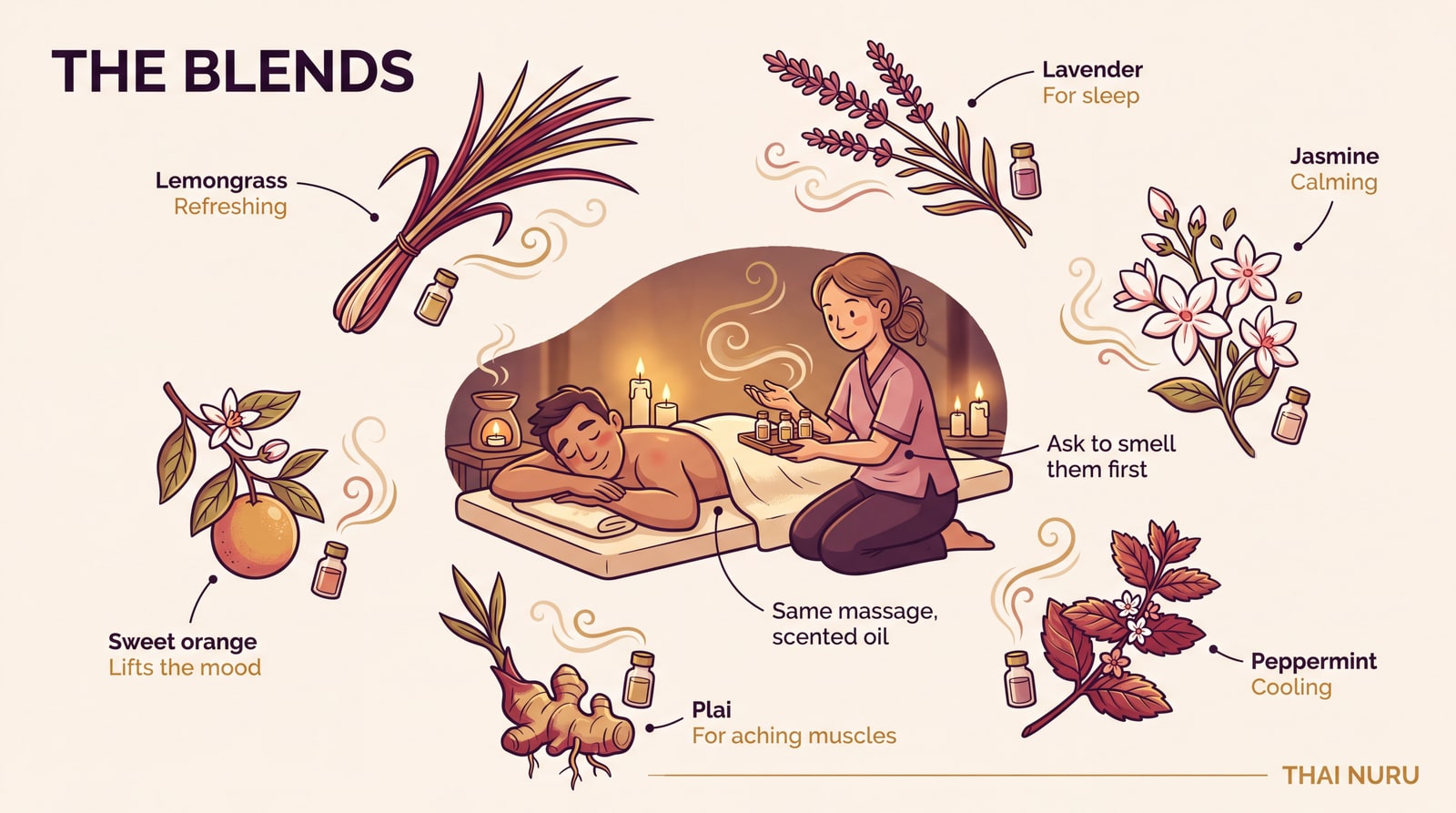
Menus vary, but the same handful recurs across the country, each sold against a stated effect:
- Lemongrass (ตะไคร้) — the signature Thai scent, sharp and citrus-green, usually sold as refreshing and reviving. The most distinctively local choice on any menu.
- Lavender — sold for relaxation and sleep, and the most commonly offered evening option worldwide.
- Jasmine (มะลิ) — heavy, sweet and floral, carrying strong cultural associations in Thailand.
- Peppermint or eucalyptus — cooling, often paired with neck-and-shoulder work.
- Plai (ไพล) — a Thai ginger relative used in traditional preparations and frequently offered for muscular aches. The most genuinely Thai item on most blend lists.
- Sweet orange or bergamot — light citrus, the usual default when a guest has no preference.
If a scent matters to you, ask to smell the blends before choosing. Every spa expects this and most offer it unprompted.
What the evidence supports, stated plainly
Aromatherapy massage is marketed with a long list of outcomes — detoxification, immune support, hormonal balance, and so on. Being direct about this is more useful than repeating it:
- Well supported: massage itself is pleasant, reduces self-reported stress and can ease muscular tension. Scent affects mood, which is not a controversial claim.
- Weakly supported or unsupported: claims that particular essential oils detoxify the body, correct hormones, treat disease or support the immune system through skin absorption. These are marketing rather than findings.
None of that is a reason to skip the treatment. It is a reason not to pay a premium for a promised medical outcome, and to treat a spa menu's health claims the way you would treat any other advertising copy.
Safety, which does matter here
Essential oils are concentrated plant extracts and the one genuine risk in this treatment is the oil rather than the massage.
- Skin reactions are the common problem. If you have sensitive skin, eczema or known fragrance allergies, say so before the session and ask for a plain carrier oil.
- Citrus oils can be photosensitising — bergamot in particular. Getting straight on a sun lounger after a citrus-blend massage is a poor idea in Thailand's sun.
- Pregnancy. Several oils commonly offered are avoided during pregnancy as standard practice. Tell the spa you are pregnant when booking, not on the table; many decline the first trimester as policy and offer a dedicated pregnancy treatment instead.
- Asthma and respiratory sensitivity. Strong scent in an enclosed room can be a trigger. A lighter blend or an unscented oil is always available for the asking.
- Nut-derived carriers. Some blends use almond oil. Declare a nut allergy before the session.
General information, not medical advice. A known condition is a conversation for a doctor rather than a spa receptionist.
Getting the treatment you paid for
- Ask what the blend actually is. A spa that can name the oils is using them; one that cannot is probably using a pre-scented massage oil, which is fine but is not what the menu describes.
- Ask for the pressure you want. Aromatherapy massage is frequently delivered very light by default because it is sold as a relaxation treatment. Raeng raeng gets you firmer work; you do not have to accept a stroking session because of the category name.
- Say if the scent is too strong. It can be adjusted, and it is easier to fix at the start than to endure for ninety minutes.
- Leave the oil on for a while. Most spas advise against showering immediately, which is the one piece of standard aftercare worth following.
Why this page exists on this site
Thai Nuru is a directory of adult massage venues, and aromatherapy massage is not one — it is an ordinary spa treatment sold in hotels, malls and wellness centres across Thailand. We list no aromatherapy venues and publish no price range for them, because a range we have not verified is a number invented for the sake of having one.
It is covered here because the massage types reference is only useful if it is complete, and because a visitor who understands the wellness side of the market is much better placed to read the rest of it.
Where to go next
If you want the same technique without the scented premium, oil massage is the same work. If you want the clothed, stretching, floor-mat tradition instead, that is traditional Thai massage. Every format side by side on the types of massage in Thailand table.